Artificial intelligence restaurants: how AI voice ordering turns phone calls into revenue
Introduction: why artificial intelligence matters for modern restaurants
Artificial intelligence restaurants are not futuristic dining rooms filled with robots. Artificial intelligence restaurants are those that use AI to automate operations, streamline ordering, and enhance customer experience. In 2026, they are practical operators using artificial intelligence across the ordering process, food preparation, marketing, inventory management, and restaurant operations. For independents, the clearest use case is often simple: answer every phone call and turn it into a paid direct order.
Post-2020 habits changed the restaurant industry. More guests want pickup, delivery, fast answers, allergen help, and easy online ordering. At the same time, restaurant owners face tighter labor, higher costs, more food waste, and rising third-party fees. That is why ai powered tools are moving from experiments to everyday restaurant technology.
VoiceBit is a restaurant-focused AI platform for phone, web, and SMS ordering. It helps restaurant operators capture calls, process payments, manage delivery, and grow customer loyalty without losing human hospitality.
Key takeaway: AI that answers and converts every call is often the fastest path to ROI.
What “artificial intelligence restaurants” actually look like in 2026
Picture a busy restaurant setting at 6:30 p.m. A guest taps “call” from Google, voice assistants answer instantly, ai agents explain menu items, payment is captured, and delivery is dispatched. Staff stay focused on the dining experience instead of juggling phone calls and tablets.
Artificial intelligence restaurants are those that use AI to automate operations, streamline ordering, and enhance customer experience. Artificial intelligence in restaurants means software that can listen, speak, understand natural language processing, learn from sales data, and act in real time. Restaurants are scaling artificial intelligence across their day-to-day operations by leveraging ai, from customer inquiries to prep planning. According to Deloitte, leaders expect AI investment to keep rising.
Common ai tools in the food industry include:
AI voice ordering and ai powered virtual assistants
Chatbots and virtual assistants for customer interactions
Predictive analytics for demand forecasting
Dynamic pricing and personalized menu suggestions
Content creation ai for social media posts
Self service kiosks, smart screens, and mobile apps
Computer vision for quality control and waste tracking
The fastest win is usually not robots. It is capturing missed demand.
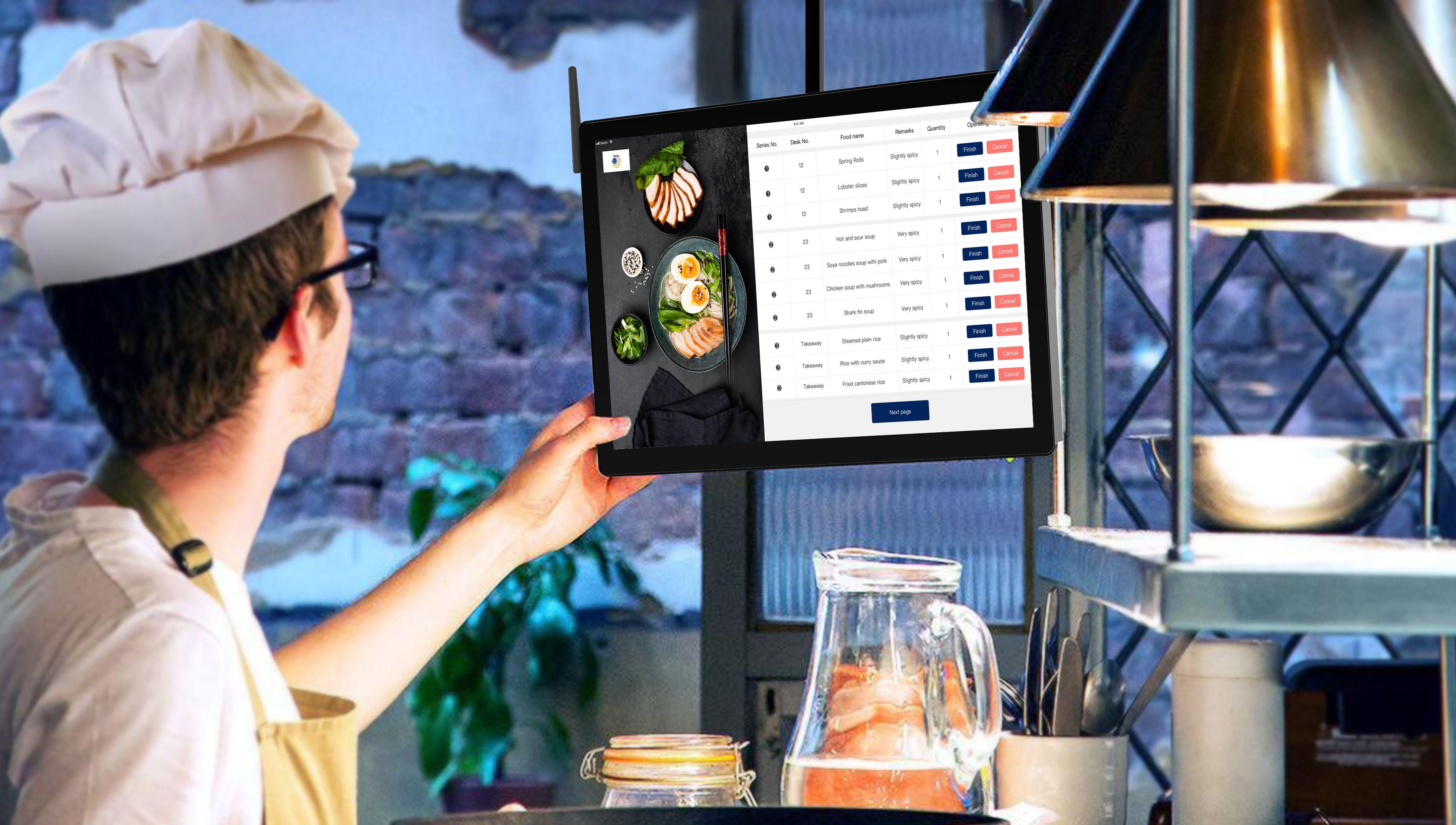
AI voice ordering: turning every phone call into a direct online order
Many independents still receive 40 to 70% of takeout and delivery demand through phone calls. Missed calls, long holds, and rushed conversations create lost revenue. Worse, 83% of customers will switch restaurants after multiple voicemails.
AI powered systems connect to existing phone lines, answer 24/7, handle multiple callers, and reduce response times. AI phone answering can reduce customer call response time by 27%, and 27% of online users prefer voice search for restaurant inquiries.
Here is the customer journey:
Greet the guest in the restaurant’s tone.
Answer customer inquiries about hours, allergens, delivery zones, and specials.
Capture modifiers, sizes, and menu items.
Suggest relevant add-ons.
Confirm address and pickup time.
Process payment.
Send SMS or email confirmation.
VoiceBit syncs menus with POS data, builds a branded voice assistant, supports secure payment processing, and can send SMS or web reorder links. The result is:
Higher answer rates
Better order accuracy
Less staff stress during rushes
Lower dependence on third-party marketplaces
Key AI use cases in restaurants today
AI in restaurants reaches from the front door to the loading dock, but the right ai depends on the problem. For most independents, voice ordering and customer service inquiries come first, especially since 40% of operators use AI for customer service inquiries.
High-impact ai applications include:
Answering phone calls and converting orders
Managing reservations, where 79% of diners are comfortable with AI in reservation processes
Food preparation forecasting to reduce food waste
Inventory and purchasing automation
Marketing, including generative ai and content creation ai
Staff scheduling and labor control
Menu engineering and pricing strategies
“45% of restaurant operators use AI for data analytics,” showing ai adoption is already mainstream.
Answering phone calls and managing direct ordering with VoiceBit
A busy restaurant can miss 10 to 30% of calls during peak hours. AI phone answering can save restaurants from handling 40 calls daily, giving staff more time for guests, expo, and food quality.
VoiceBit’s ai system handles “Are you open?”, “Do you deliver to 10012?”, “Can you do nut-free?”, and “What is gluten-free?” Then it converts the call into pickup or delivery. The platform understands sizes, modifiers, availability, loyalty programs, and delivery rules. It can enter orders into the POS, take payment, and use stored tokens for loyalty guests.
VoiceBit also supports:
Reservations and wait-list notes, including party size, preferences, wait estimates, and SMS confirmations.
Customer data recognition by phone number, so repeat guests can reorder favorites.
Personalized service through targeted rewards and upsells.
Before VoiceBit, a 3-location pizzeria might miss weekend calls and lose orders to apps. After implementing ai, missed calls drop, average ticket rises through consistent upsells, and staff spend less time apologizing for hold times.
Improving menu design, pricing, and food preparation with artificial intelligence
Once ordering data flows through an ai powered platform, restaurants operate with clearer insight. By analyzing historical data, AI predicts customer ordering patterns, and artificial intelligence is predicting customer demand in the restaurant industry.
Menu design: AI reviews item sales, margins, and customer review language to decide what to feature, re-price, or remove.
Pricing: AI can optimize pricing strategies based on customer demographics, while ai technologies also support happy hour and daypart testing.
Upsells: Smart screens suggest upsells based on weather and time.
Prep: Predictive AI platforms calculate optimal timing for kitchen prep, and software analyzes past orders to inform chefs how much food to prep.
VoiceBit connection: Phone, web, and SMS data become cleaner inputs for menu engineering, without extra spreadsheets.
Use dynamic pricing carefully. Guests value transparency more than clever math.
Reducing food waste and improving inventory decisions
Restaurants often waste 4 to 10% of food spend, according to FoodSight. With thin margins, cutting food waste is a direct path to cost savings.
AI powered inventory systems use sales data, supplier lead times, seasonal trends, and demand forecasting to recommend purchasing. AI can track inventory levels in real time, AI predicts usage patterns to optimize inventory management, and AI can automatically reorder supplies before they run out.
Accurate VoiceBit order capture reduces “mystery demand.” When phone orders are structured, restaurants can manage inventory with better forecasts. Some operators add cameras and scales scan trash to identify over-prepared food items. Dishoom reduced food waste by 20% using AI inventory tools, showing how predictive ordering can work in real restaurants. AI helps cut down on food waste by tailoring purchasing and helps reduce food waste without lowering freshness.
Enhancing customer experiences with AI: beyond the first order
AI technology personalizes dining experiences in restaurants. It is not meant to replace human hospitality. It gives teams more time to create a better restaurant experience.
AI can provide personalized recommendations based on customer preferences. Machine learning analyzes purchase history to improve recommendations over time and send personalized coupons to customers. VoiceBit can trigger reorder links, birthday offers, and “we miss you” campaigns after a guest stops ordering.
AI can identify trends in customer reviews to improve service. Software scans online reviews to flag recurring customer complaints, and AI is used to parse reviews and generate reports on customer sentiment. AI can analyze customer reviews to improve service quality.
AI can also enhance customer experiences through:
Multilingual support, including English and Spanish ordering.
Text options for guests who prefer not to call.
Patient, consistent answers no matter who is on shift.
A manager noticing repeated “wrong toppings” complaints can review transcripts, fine tune scripts, and fix root causes quickly.
Marketing and content creation AI for restaurants
Consistent marketing matters in a noisy delivery market. AI tools can create personalized marketing content quickly by using machine learning algorithms to generate and tailor messaging, and AI can help restaurants create engaging content efficiently.
Practical uses include:
AI can generate social media captions for restaurants.
Weekly “order tonight” SMS linked to the VoiceBit direct ordering page.
Google Business Profile updates for hours or new items.
Menu descriptions that match brand voice.
Short videos for specials, since 51% of marketers use AI for video creation and over half of AI users in marketing utilize it for video creation.
Generative ai can instantly generate drafts, but humans should approve final content for taste, culture, and accuracy. Pair AI with clean web design, branded ordering pages, and simple mobile flows so guests can act immediately.
Operational automation: staff scheduling, training, and admin
Labor pressure makes every hour count. AI optimizes staff schedules by analyzing peak hours, and AI helps restaurants predict staffing needs based on historical data. AI reduces labor costs by ensuring adequate staffing levels.
Scheduling tools use historical data, weather, reservations, and order volume. AI analyzes employee performance to improve scheduling accuracy. It matters because 38% of restaurant leaders see effective scheduling as AI’s top benefit.
AI based training can answer new-hire questions, flag frequent voids, and suggest micro-lessons. VoiceBit effectively adds a virtual employee to every shift, often for less than an added FTE.
Other automation includes:
Reconciled orders and payouts
Missing delivery fee checks
Weekly owner reports
Supply chain alerts, since AI optimizes supply chain logistics in restaurant operations
Restaurants integrate AI to automate tasks and improve drive-thru times. AI can reduce drive-thru wait times by 30 seconds. Taco Bell and other large brands show how quickly these tools can scale. Automated arms flip burgers, fry food, and assemble pizzas consistently, but most independents should start with ordering automation.

Risks, limitations, and best practices for AI implementation
AI solutions bring numerous benefits, but ai implementation needs care. Bad setup can create wrong answers, poor customer satisfaction, payment risk, or confusing SMS opt-ins.
Best practices:
Start with one use case, such as phone ordering.
Train the AI on live menus, modifiers, delivery zones, and policies.
Test with staff and loyal guests.
Monitor transcripts and complaints.
Keep human escalation available.
Choose restaurant-specific ai powered solutions, not generic bots.
Deploying ai should include a monthly review. Check abandonment rate, order accuracy, upsells, refunds, and guest feedback. Implementing ai works best when operators stay in control and use automation to extend hospitality.
How to get started with AI in your restaurant
Here is a simple path for restaurant operators:
Diagnose the pressure point. Is it missed calls, third-party fees, prep waste, or slow service?
Choose a specialized tool. For meaningful phone volume, VoiceBit is often the best first step.
Prepare the details. Gather menu data, modifiers, hours, holiday overrides, delivery zones, fees, payment rules, and escalation rules.
Train the team. Explain that ai agents remove busywork, not hospitality.
Measure 30, 60, and 90 days. Track answer rate, average ticket size, repeat order rate, recovered revenue, and cost savings.
Pro tip: Start with one location before rolling out across restaurant groups.
As you improve, add ai powered systems for forecasting, loyalty, marketing, and inventory.
Why choose VoiceBit as your AI partner
Generic bots answer questions. VoiceBit is built for restaurant operations. It understands ordering, modifiers, delivery, payment, loyalty, and branded direct ordering. VoiceBit also supports web design needs through branded online ordering pages that make phone, SMS, and web demand easy to convert.
VoiceBit helps with:
End-to-end direct ordering by phone, web, and SMS
Secure payment processing
Loyalty programs and customer data ownership
Delivery management and tracking
Multi-location support
Menu sync with POS systems
Compared with answering services, VoiceBit can take the order. Compared with marketplaces, VoiceBit helps protect margin. Compared with in-house phone labor, VoiceBit never misses a guest.
If your phones are ringing and your team is stretched thin, VoiceBit gives you an always-on AI employee built for restaurants.
Conclusion and next steps
Artificial intelligence restaurants are already here. They are operators using focused ai solutions to answer every call, improve customer experience, reduce food waste, and make smarter daily decisions.
Starting with AI voice ordering creates fast, visible ROI and builds the data foundation for better menu design, prep, inventory, and marketing.
Visit the VoiceBit products page to see voice ordering in action, explore direct ordering, and schedule a consultation. Restaurants that adopt practical AI today will have a competitive edge as artificial intelligence becomes standard across the food industry.
Why VoiceBit
VoiceBit was built for restaurants that want to capture every order, answer every call, and keep customers coming back, without adding more work for staff. Our AI Voice Employee answers 24/7 in English and Spanish, takes orders, captures customer details, and routes complex calls to your team with full context.
Hear what real calls sound like below, then book a free demo or learn more about our phone AI.
Interested in VoiceBit?
Book a free demo or learn more about our AI Voice Employee.